
Preface
Two claims of revelation in history rest on public events rather than private visions. The first is Sinai. Unlike the private visions claimed by many faiths, the Tanakh (Jewish scripture) records God speaking to the entire nation at once. Critics sometimes cite the Aztec legend of Huitzilopochtli as a parallel, but that revelation came to the nation through a priest; it was not direct. Sinai seems to be history’s only claim to a national encounter with the divine, and a shared national memory is extraordinarily hard to fabricate. Let’s say that, on this basis, we accept that the Tanakh is authoritative.
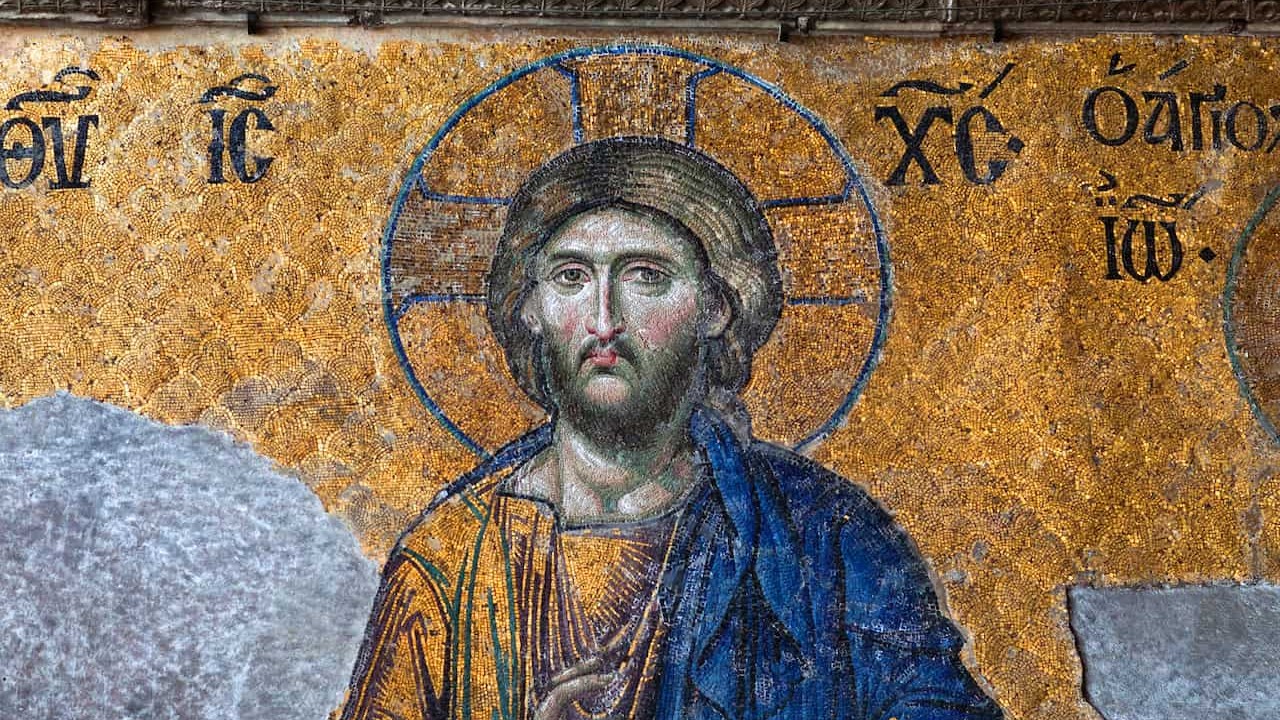
The second is the resurrection of Jesus of Nazareth – the claim on which all of Christianity stands. Christianity claims to be the fulfillment of the religion of Sinai; Judaism holds that Jesus was not the Messiah. Both share a root in the Tanakh, and both cannot be right. (Islam also claims this heritage; I address it here.)
This page makes the case in two parts. First, the historical evidence that Jesus rose from the dead and claimed to be God. Second, the evidence from Israel’s own scriptures: prophecies, themes, and covenantal continuity that only Jesus fulfills.
All Tanakh references use the Rabbi Rosenberg translation, except one from the Septuagint.
The Historical Resurrection
Christianity began to spread through eyewitness testimony to a years-long series of public miracles. The Gospels present Jesus performing countless miracles, foretelling His own crucifixion, rising from the dead, and remaining in Judea for 40 days – eating and drinking with His followers – all written down within living memory of the events. Even skeptical scholars like Bart Ehrman date the Gospels within the lifetimes of people who knew Jesus, and Paul’s letters earlier still. In 1 Corinthians, St. Paul tells his readers that over 500 people had seen Jesus risen, most of whom were still alive to be asked (1 Cor. 15).
These eyewitnesses and their immediate followers were willing to die rather than recant. Most scholars accept the martyrdoms of Peter, Paul, and James as historical, and the Roman historian Tacitus describes brutal, widespread persecution of Christians in Rome within about thirty years of the crucifixion. They gained no status, no wealth, and no power for their beliefs. Just being crucified, burned alive, and fed to animals.
Is it possible they made it all up? Hardly. Liars recant to save themselves from the executioner; these men didn’t. Is it possible they were all hallucinating? Again, no; hallucinations are private, and multiple people reported encountering the risen Jesus together, repeatedly, sharing meals with Him. Is it possible a legend simply grew up around a mysterious teacher? Legends take time to displace memory, and these accounts were circulating while the witnesses – and their opponents – were still alive to contradict them. None of the usual explanations fits the evidence as well as the one the witnesses themselves gave: He rose.
Who Rose?
No teacher had ever spoken as Jesus of Nazareth did. At best, some claimed to know the way. None claimed to be the way. Some claimed to speak for God. He claimed to be God: “Very truly I tell you, before Abraham was, I AM” (Jn. 8:58) – taking for Himself the divine name God revealed to Moses at the burning bush. His listeners understood exactly what He meant; they picked up stones to kill Him for blasphemy.
The Gospels repeatedly record Jesus calling Himself the “Son of Man,” referencing the divine king of Daniel 7:13–14. Mark opens by calling Him the Son of God, a title discussed throughout the epistles (Rom. 1:4, Col. 1:15, Heb. 1:3). John opens by naming Jesus the one through whom all things were made. The epistles call Him God outright (Phil. 2:5-7, Col. 2:9, 2 Pet. 1:1), as do the letters of early Church leaders, most famously St. Ignatius of Antioch.
Nor was this a later development invented by the Church. Outside observers noticed it within a generation or two. Around 110 AD, Pliny the Younger, a Roman governor, reported that Christians sang hymns “to Christ as to a god.” The historian Tacitus (c. 116 AD) described the movement as a “superstition” named for a Christ executed under Pontius Pilate. The satirist Lucian (c. 165 AD) and the philosopher Celsus (c. 175 AD) both mocked Christians for worshipping a crucified man.
So the evidence that Jesus is who He said He is stands on four legs: corporate, firsthand testimony to miraculous events, sealed in blood; a man making the decidedly unusual claim to be God rather than merely to speak on His behalf; a sizable number of His contemporaries believing it; and, as we will now see, numerous prophecies pointing to His unique identity and to His arrival during the Second Temple period.
Prophecies
The New Covenant
The Tanakh establishes a prophetic paradox. God promises a glorious new and “Everlasting Covenant” through which He will restore amity between Himself and mankind (Jer. 31:31-33, 32:40), but also promises wrathful judgment on Israel for violating the existing Covenant (Deut. 32:23-29, Zech. 11:1-6) – sometimes in the same breath (Ez. 16:59-63, Mal. 3:1-5). In Deuteronomy, God says that because Israel made Him jealous with false gods, He would “hide [His] face from them” and make them jealous with a “foolish nation” (Deut. 32:20-21). Many prophecies repeat this plan to cut off and blind Israel as a punishment for disobedience (Deut. 28:28-29, Ps. 69:23-24, 118:19-23, Is. 8:14-16, 28:16, 29:9-14, Zech. 12) while sparing a “remnant,” a purified core (Is. 11:11-16, Jer. 23:1-6, Mic. 5:3-8, 7:15-18, Zeph. 3:11-13, Zech. 13:8-9, Joel 3:5; note: this theme primarily developed in relation to the Babylonian exile, but the cited prophecies refer to a post-exilic period).
First-century rabbis recognized that a great judgment was coming. The Talmud records that forty years before the Temple’s destruction – around 30 AD – the signs that God had accepted the Yom Kippur atonement ceased, such as the scarlet thread tied to the Temple door miraculously turning white. Josephus and the Talmud report signs of impending destruction instead, most notably the massive Temple gates opening by themselves, which the rabbis connected to Zechariah’s prophecy: “Open your doors, O Lebanon, that the fire may devour your cedars” (Zech. 11:1). Forty years later, in 70 AD, the Romans destroyed the Temple, razed Jerusalem, and scattered the people; the Sanhedrin did not long survive. Every essential element of the Old Covenant’s worship was gone. Josephus and the Talmud both note that the Second Temple fell on the anniversary of the First Temple’s destruction, a sign of providence.
But how could God render His everlasting Covenant with the Jews impossible to keep? And why did He cease to cooperate with it in 30 AD? Daniel 9 provides one answer.
Daniel gives a prophecy of 70 “weeks of years” – 490 years. The anointed one would come 69 “weeks” (483 years) after the decree to rebuild Jerusalem following the Babylonian exile. In the middle of the 70th “week,” he would confirm a covenant, be cut off, and end Temple sacrifice (Dan. 9).
Which decree starts the count? Several have been proposed, and interpreters differ. But Ezra records a decree to restore Jerusalem, issued through Artaxerxes and attributed to God, in the king’s seventh year: 457 BC. Counting 69 “weeks” from that decree brings us to 27 AD – the 15th year of Tiberius, counted from his co-regency, and the year Jesus of Nazareth began preaching. Half a “week” later, around 30 AD, Jesus established a “New Covenant in [His] blood” (Luke 22:20) and was crucified – and, as the Talmud records, the signs of God’s acceptance of Temple atonement ceased. Though modern Rabbis argue Daniel 9 is not Messianic, Josephus referenced it as the primary reason first century Jews were confident the Messiah was coming imminently, and DSS 11Q13/11QMelch corroborates this.
The Suffering Servant.
One may object that the Messiah atoning for sins through death is foreign to Judaism. But Isaiah 53, which the Talmud, Midrash, and Maimonides all apply to the Messiah, says: “Despised and rejected by men… He was pained because of our transgressions, crushed because of our iniquities; [our chastisement] was upon him, and by his wound we were healed… With the strong [are his spoils], because he poured out his soul to death… and bore the sin of many.”
One may object that the Messiah is not a victim, but a king. And indeed, the Talmud recognizes this tension. The rabbis concluded there must be two Messiahs: Messiah ben Joseph, who would die in battle, and Messiah ben David, who would complete the prophecies. But is it so far-fetched that the prophets were describing one Messiah at two different times – first suffering, then reigning?
The Divine Messiah.
One may object that God is one person, so a divine Son is impossible. But many Second Temple Jews believed that the “Angel of the Lord” described in scripture was God’s distinct, visible form. In Genesis, Jacob meets this Angel, who calls Himself “the God of Beth El” (31:11-13). Later, God commands Jacob to make an altar, not “to Me,” but to “the God who appeared to [him in Beth El]” (Gen. 35:1). The same chapter calls Beth El the place where God revealed themselves, with a plural verb (35:7). In Exodus 33, God sends Israel a guardian Angel He calls “[His] Presence” (33:2, 33:14-15); Isaiah calls this “Angel of His Presence” Israel’s “Savior” after saying God alone is Israel’s Savior (Is. 43:11, 63:7-8). In the same chapter of Exodus, Moses both “[cannot] see [God’s] face” (33:20) and speaks to God “face to face” (33:11). Rabbinic literature later condemned belief in “Two Powers in Heaven” as heresy – a condemnation that only makes sense if such ideas had a real foothold among Jews, and that hardened as Christianity spread.
One may object that scripture never calls the Messiah divine. But Isaiah 9:5, which the Talmud and Maimonides call Messianic, calls the Messiah – an infant – “Mighty God,” a phrase repeated in Isaiah 10 of God Himself. Daniel 7 describes the Messiah as one who comes with the clouds – an image used of God – and receives an eternal kingdom over all peoples; in the Talmud, Rabbi Akiva suggests it shows the Messiah enthroned beside God. Jeremiah 23:3-6, again called Messianic by the Talmud, gives His name as “The Lord Is Our Righteousness.” In Zechariah 2, the Lord says, “I will dwell in your midst, and you shall know that the Lord of Hosts has sent me to you” – the Lord sent by the Lord to live among men. And God says He will Himself come to the Second Temple and initiate the covenant (Mal. 3:1), making that Temple more glorious than the first (Hag. 2:7-9) – a Temple that has not stood since 70 AD.
Fulfillment
The prophets foretold Israel’s judgment; Jesus foretold it too, and it came within a generation. The prophets foretold a divine Messiah; Jesus identified Himself as the Messiah and the Son of God (Matt. 16:16-17), sent by God (John 20:21), yet Himself God (John 20:28-29). The prophets foretold a New Covenant; Jesus, the suffering servant, established it in His blood (Luke 22:20). They foretold a chosen remnant spared; Ezekiel 9 says the remnant would be marked with a tav – a letter written in ancient Hebrew script as a cross. And the New Covenant took in the gentiles, fulfilling God’s promise to bless and gather the nations through Israel (Gen. 22:18, 49:10, Psalm 22:28, Isaiah 2:2, 54:3, 56:6-7, 66:19, Jer. 3:17, 16:19-20, Mic. 4:1-4, Jonah 3) – and His promise to make Israel jealous through a “foolish nation”: the gentiles, starting with Rome, the very empire that ruled Israel.
The General Narrative
But we can go much further than individual prophecies. The Tanakh is a story without an ending: struggle, bloodshed, promise, hope, but never a conclusion. What it’s all about and how it comes together is left open. The Gospel answers this. Jesus is the conclusion to the story – and not only this, He is the key that unlocks the meaning of everything that came before Him:
Adam is made from the dust of the earth; Jesus is born of a virgin. Adam and Eve desire to be gods, so they disobey; Jesus is God, yet chooses to obey. Adam and Eve take fruit from the tree of life, and through their disobedience, sin and death enter the world. Jesus, the “fruit of [Mary’s] womb” (Luke 1:42), is nailed to a tree of death, and through His obedience and Mary’s, sin and death are defeated. God tells the serpent who tempted Eve that he would strike at the heel of her offspring, but would be crushed. Jesus is that offspring – suffering at the hands of the serpent, but defeating him in the same stroke.
Cain makes an unworthy sacrifice and kills his brother, the shepherd, who made a worthy one. The Temple authorities, who offered animal sacrifices, handed over their brother Jesus – the good shepherd and the perfect sacrifice – to be killed. God commands Abraham to sacrifice his son, but stops him, distinguishing Himself from the gods of the pagans. In Jesus, God fully reverses the pagan sacrifices by giving up His son, for us. Judah sells Joseph, the beloved son of Israel, into slavery for pieces of silver. Joseph rises from that state and eventually rescues his brothers and their whole family from famine. Judas sells Jesus, the beloved Son of God, unto death for pieces of silver. Jesus rises from death and rescues His Apostles, and the whole world, from death.
Moses spends forty years in the desert before beginning his ministry; Jesus fasts in the desert for forty days before beginning His. Moses protects his people from death through the blood of the Passover lamb, and feeds them with manna in the desert. Jesus is the true Passover lamb who protects men from spiritual death, and makes His body the true bread from heaven at the Last Supper, fulfilling also the bread and wine offered by Melchizedek. Moses leads his people out of slavery through the Red Sea; Jesus washes away sin through Baptism. Moses heals his people from poison by lifting up the image of a serpent on a pole; Christ heals His people from death by being lifted up on the cross.
The Old Covenant was made at one time with all the people present and all those to come (Deut. 29:9-15), and God ratified it by sharing a meal with the elders (Ex. 24:8-11). Jesus made His coming sacrifice present to the Apostles at the Last Supper, ushering in the New Covenant before the crucifixion. Both covenants reach beyond a single moment in time, and both are sealed with a meal shared with God. God gave the law on stone tablets to Moses amid the fire of Mount Sinai. The Holy Spirit wrote the law on the Apostles’ hearts – as Ezekiel and Jeremiah prophesied (Ez. 36:26, Jer. 31) – amid tongues of fire in the upper room, on the very feast of Pentecost that celebrated the giving of the law at Sinai.
Jesus and Elijah both showed power over the elements, denounced sin among the ruling class, prophesied, multiplied bread, raised the dead, fasted forty days and nights, and ascended. Jesus reveals that the “glorious dwelling place” of Isaiah, Jeremiah, and Ezekiel is Heaven, and their “place of judgment” is Hell. He is the suffering servant of Isaiah. He establishes the New and Everlasting Covenant promised to all three. His resurrection fulfills Ezekiel’s vision of bodily resurrection and everlasting life. Adam, Abraham, Isaac, Jacob, Joseph, Moses, Joshua, Saul, David, Solomon, Elijah – all the chosen ones sinned and fell short. Jesus did not, fulfilling the Old Covenant and opening a new age.
To understand why the firstborn (Israel) would be joined, and in a sense surpassed, by the younger (the gentiles), consider the scriptural pattern of unmerited election: God favoring certain people without their doing anything to deserve it, and lifting them above natural limitations. Isaac, the child of promise, receives the inheritance over Ishmael, the firstborn. Before Jacob and Esau were born, God told Rebekah that “the older shall serve the younger.” God fulfills Joseph’s dream of ruling over his elder brothers. The pattern repeats with Ephraim, Moses, Samuel, David, and Solomon. The New Covenant is the final election, through which God blesses people of all nations with the fullness of revelation – not according to natural lineage, but according to His call. There is neither Jew nor gentile; all are one in Christ Jesus.
Covenantal Continuity
The key features of the religion of Moses were right sacrifice, God’s localized presence, and authoritative guidance from God. These objective marks set Israel apart from the pagans. Rabbinic Judaism, through no lack of devotion, has had none of them for nearly two thousand years. Proper sacrifice depends on a Temple that no longer exists. The Temple and the Ark, which localized God’s presence, are gone. Israel has not recognized a prophet in some 2,400 years, and there has been no Sanhedrin to issue binding rulings since antiquity. What remains is a tradition of interpretation whose meaning varies from rabbi to rabbi and community to community. Isaiah’s warning comes to mind: “They worship me in vain; their teachings are merely human rules” (Is. 29:13).
Conversely, the Catholic Church, which claims to be the fulfillment of the religion of Moses, has all three of these distinguishing features:
1. Right sacrifice. At every Mass, the sacrifice of Christ is present. There was only ever the one true sacrifice, on the cross – but to be at Mass is to be there, the same way entering into the Mosaic covenant was to be there at Mount Sinai. The Mass fulfills all three of the ritual requirements of a todah, a sacrifice of thanksgiving. The priest offers bread, which sacramentally becomes the true and real body of Christ, fulfilling the need for both a flesh offering and a bread offering. Then the priest offers wine – another part of the todah – which becomes Christ’s blood, sacramentally separating His body and blood: the sacrifice. Then all who partake consume the victim, completing the todah. The Midrash, interpreting Jeremiah, says that in the age to come all offerings will cease except the todah. With the Temple gone and the Mass offered every day across the world, it appears the Midrash was right.
2. God’s localized presence. The tabernacle in every Catholic church contains the Eucharist, the bread transformed into Christ’s body; it is the new Ark of the Covenant. The Ark held three things. Manna, the bread that kept Israel alive while wandering the desert. Aaron’s staff, which budded, symbolizing the High Priest’s authority and life coming from death. And the tablets of the Ten Commandments, the terms of the Covenant. In the Eucharist, the body of Christ, these three symbols give way to the realities they pointed to. The manna gave life; this bread is life. Aaron’s staff symbolized the High Priest’s authority and life from death; Christ is the risen High Priest. The stone tablets stated the law; Christ is the very Word of God – He is the law.
3. Authoritative guidance. Under the Old Covenant, the ordinary authorities – the Levites and the Sanhedrin – formed a judicial body with real, binding authority, passed down by succession. When they strayed badly, God sent prophets, whose words He protected from error, to call the people back. The Apostles and their successors fulfill both roles: they hold binding judicial authority, passed down by an unbroken chain of ordinations going back to Christ, and the same Spirit who spoke through the prophets protects them from error. At the Last Supper, Christ gave the Apostles “the Spirit of truth” to “abide forever” and “teach [them] all things” (John 14:16-18). Why this authority is necessary, and why it centers on the Bishop of Rome, is argued in full in the Church section.
Summary
Suppose I’m wrong about all of this. Where does that leave Judaism? With a holy book that has no ending; with no Temple, no sacrifice, no Sanhedrin, and no prophets; and with prophecies that can no longer be fulfilled – God coming to the Second Temple and initiating the New Covenant there (Mal. 3:1-5, Hag. 2:7-9), or the Messiah coming before the scepter departs from Judah (Gen. 49:10). Further, it leaves an exile many times longer than the Babylonian one, with no particular explanation for it. Does this sound reasonable? Or could it be that the Messiah came and, like the prophets before Him, was rejected?
The evidence that Jesus is who He said He is rests on four legs: firsthand, corporate testimony to His resurrection, sealed in blood; His own decidedly unusual claim to be God; the belief of a great number of His contemporaries; and the prophecies of Israel’s own scriptures, pointing to His identity and to His arrival while the Second Temple stood. The New Testament is the only way to make sense of the Jewish scriptures: it explains prophecies that have already come true, and it concludes and unlocks the Tanakh. Through Jesus, the God of Israel is worshipped day and night across every nation on earth, just as the prophets foretold.